WhatsApp / WeChat: +86-15965642277

Mast climbing work platforms

A stable, full-length working deck that climbs its own masts — the efficient alternative to facade scaffold for render, cladding, painting and refurbishment.

The concept

Work at the height you need, not at the height you built

Scaffold is erected once and then waits, floor after floor, until the trades catch up with it. A JKTECH mast climbing platform does the opposite: it climbs continuously, so the deck is always exactly where the work is. Crews load materials at ground level and lift them to a single stable working surface instead of carrying them up ladder after ladder.

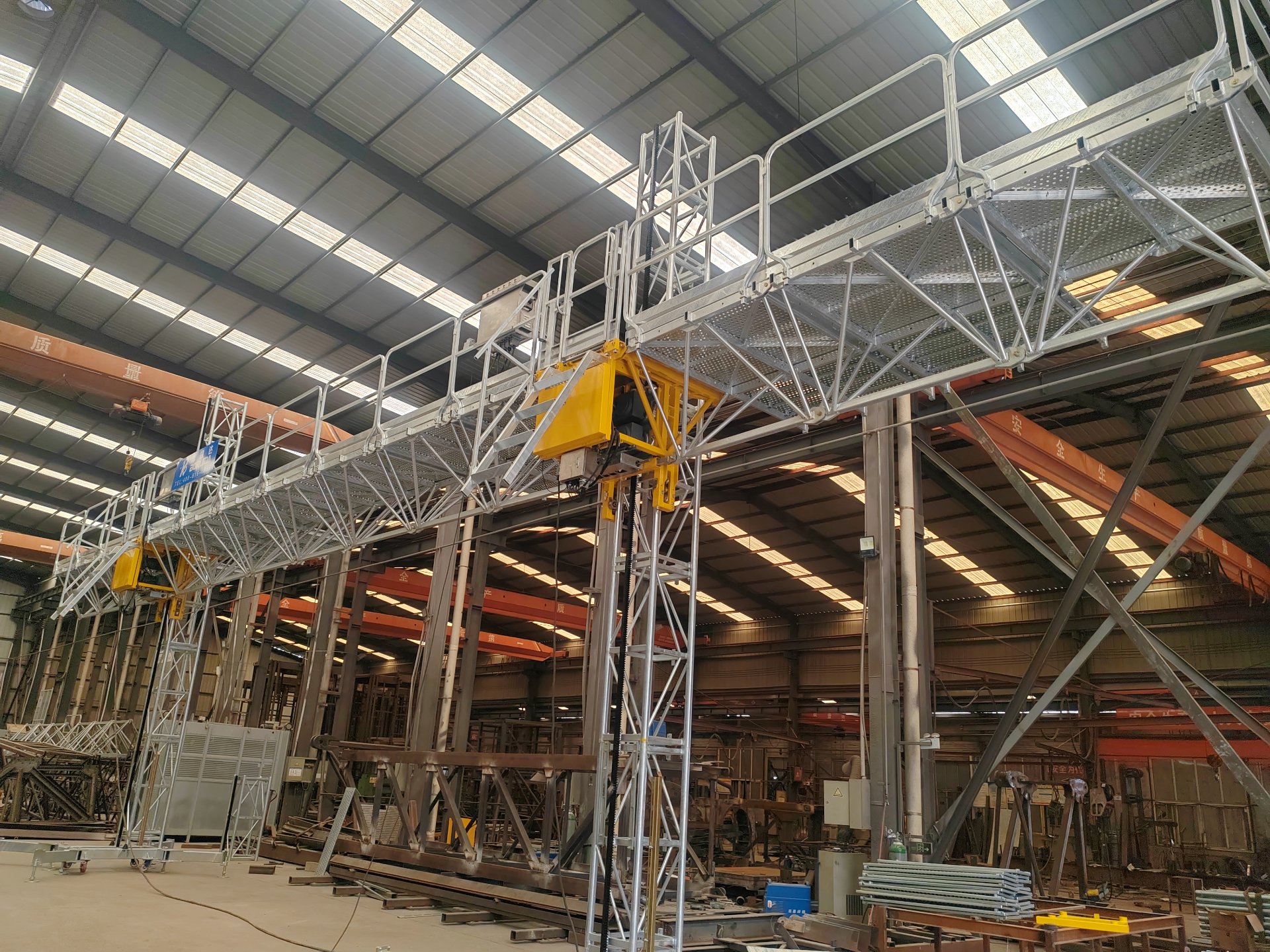
The platform is assembled from modular deck units and masts, which means the same equipment covers a 12 m annexe today and a 30 m elevation next month — simply by adding units and moving the wall ties.
Advantages

Why contractors switch from scaffold

Productive

One deck serves the whole elevation. Trades work continuously instead of waiting for access to be rebuilt.

Safer

Guardrails, toe boards and full-length decks mean no climbing over scaffold tubes with tools in hand.

Flexible

Bolt-on extensions, stepped decks and cantilever sections follow irregular facades, bays and balconies.

Fast to erect

Standard masts, wall ties and pin-connected decks keep installation time and labour cost low.

Technical data

Platform specifications

Reference figures. Platform length, deck width and mast spacing are configured for each project.

Platform and deck
Platform lengthModular; up to 30 m per mast group
Deck width0.75 m · 1.0 m · 1.5 m
Deck materialGalvanised steel with anti-slip surface; aluminium option
Load capacityUp to 7.5 kN per mast (uniform distributed load)
Guardrails1.0 m and 0.5 m rails with toe boards on both decks
AccessInternal stairway or ladder hatch between levels
Drive and erection
Lifting speedApprox. 6 – 9 m/min, stepless with frequency converter
Mast sectionsGalvanised, bolted splices, rack integrated
Wall tiesAdjustable ties for slabs, columns and steel frames
Power supply380 / 400 / 415 / 440 V, 50 or 60 Hz
ControlGround station plus platform-level pendant control
Wind ratingOperating and out-of-service wind speeds stated per configuration

Safety equipment: progressive safety gear on every drive unit, overload limiter, upper and lower limit switches, mechanical end stops, emergency stop on both decks, and interlocked access gates.

Erection

From delivery to working deck

  1. Base units set out and levelled on the slab or ground beam
  2. First mast sections bolted to the base and tied to the structure
  3. Drive units mounted and deck panels pinned between the masts
  4. Masts raised with the platform's own drive as the facade rises
  5. Tie-in positions checked against the approved mast layout drawing
  6. Function test and handover with the commissioning checklist

Every delivery includes the mast layout drawing, tie-in schedule, erection instructions and a commissioning checklist so your own team can build the platform without waiting for a supervisor from overseas.

Applications

Where the platform earns its keep

Render, plaster and insulation

Continuous deck along the elevation lets the render crew work without interruption, with materials lifted directly to the level in progress.

Curtain wall and cladding

Long decks support panel handling and alignment; deck extensions follow bays and set-backs without rebuilding access.

Painting and refurbishment

Occupied buildings can be worked on elevation by elevation, with the platform raised clear of the ground floor at night.

Inspection and maintenance

Used on silos, tanks, chimney stacks and industrial facades where access is needed repeatedly over a long service life.

Send us your elevation drawing

Tell us the height, the facade length and the trades involved — we will specify the mast layout and deck arrangement.